 Factory store
 Professional area




Why Andreas Caminada sends his talented trainees to Felchlin

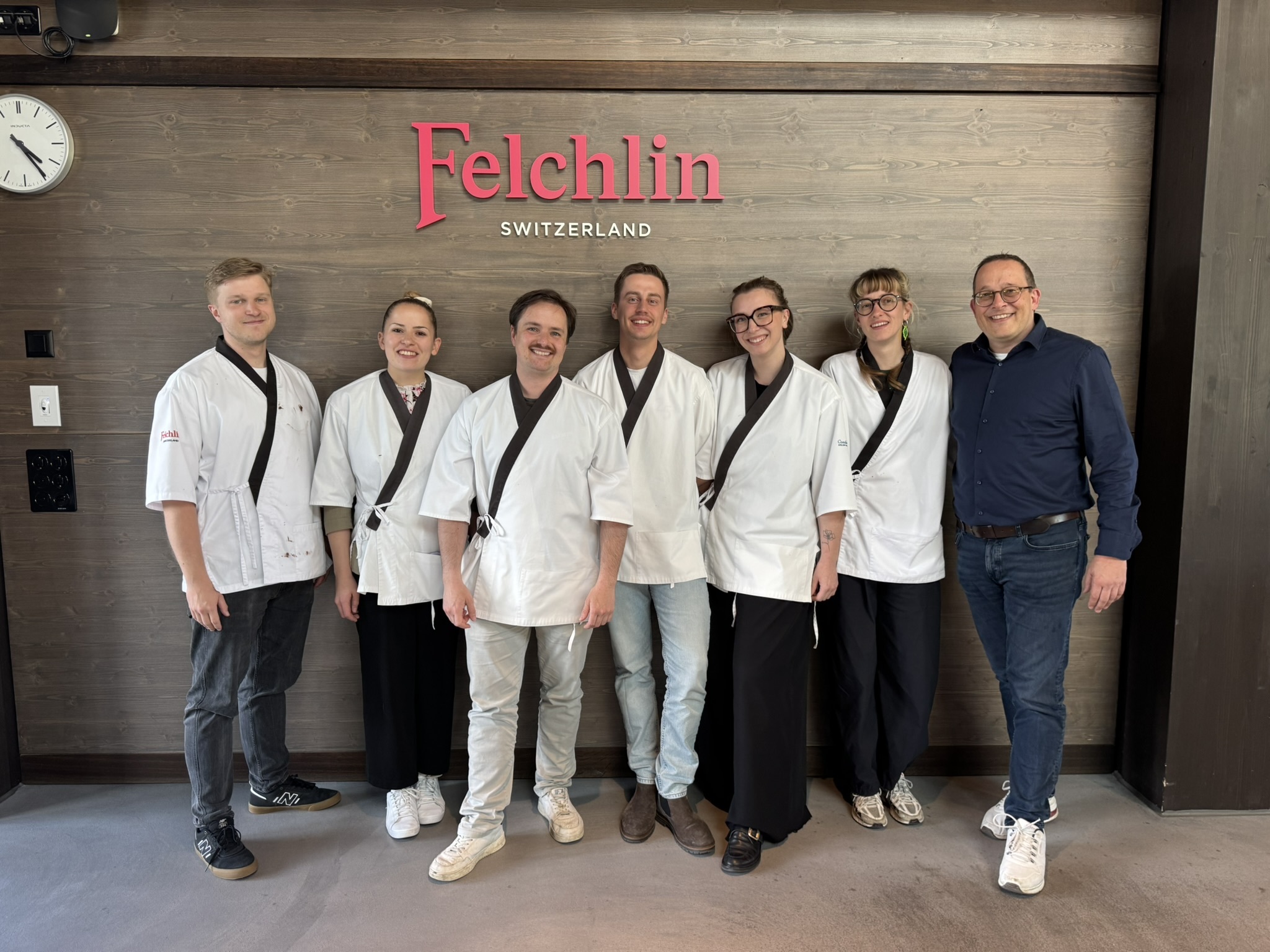
How is true quality achieved in pâtisserie? For Andreas Caminada, it doesn’t begin on the plate – it begins with an understanding of the product itself. That is precisely why the Fundaziun Uccelin sends its up-and-coming talents to Felchlin in Ibach for part of their training programme.
Nurturing young talent and passing on knowledge: when talents rediscover chocolate at Condirama
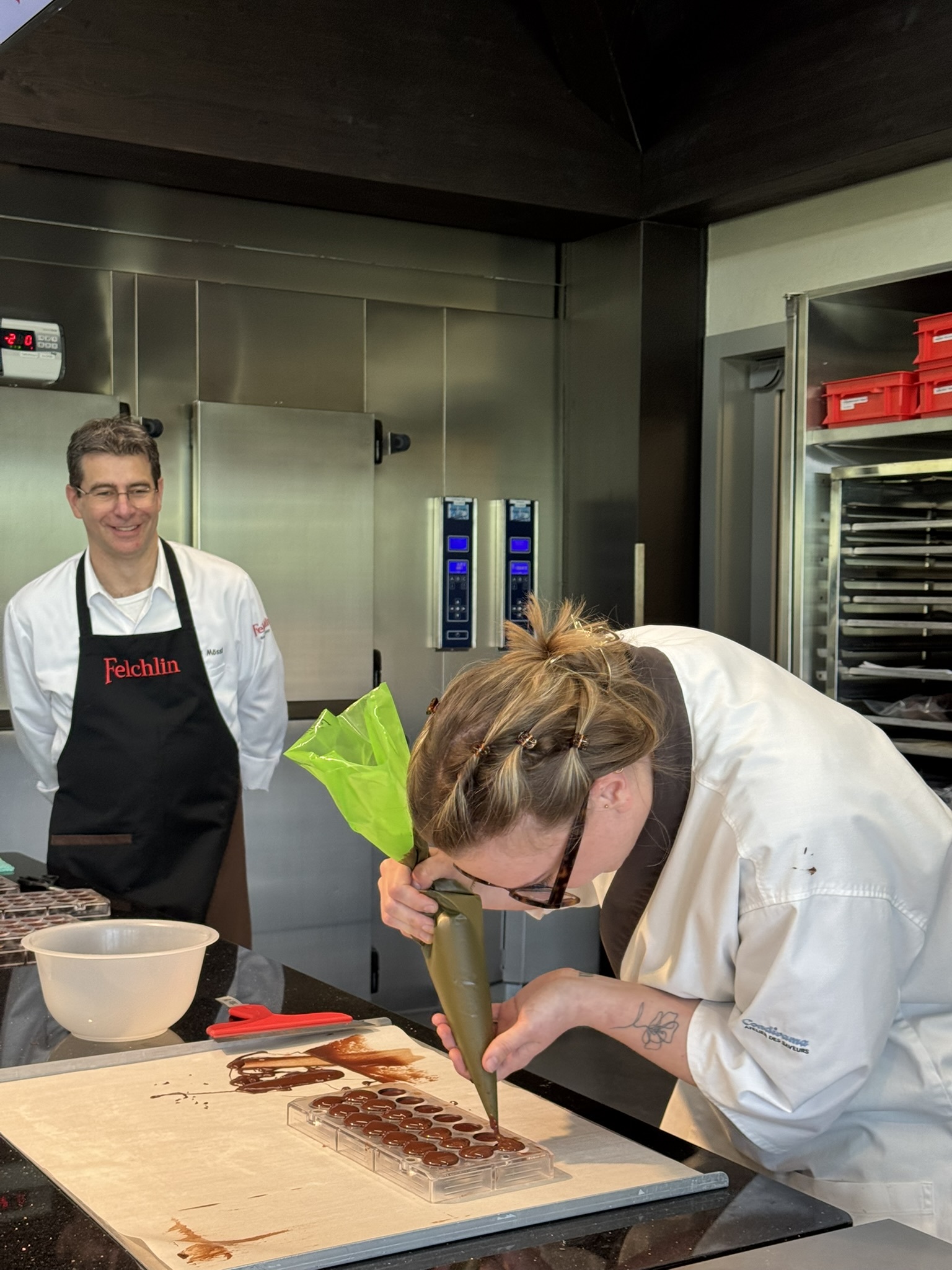
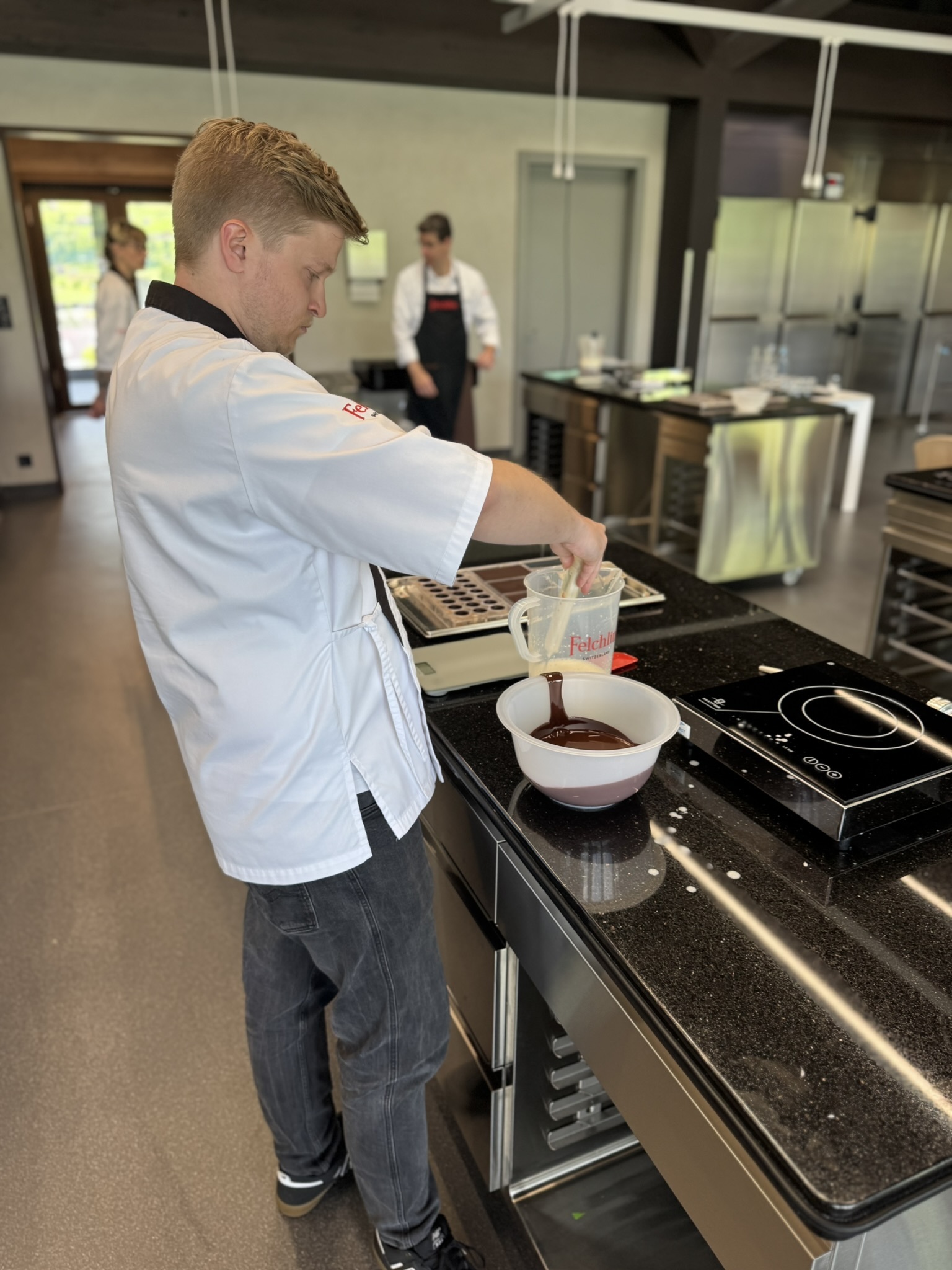
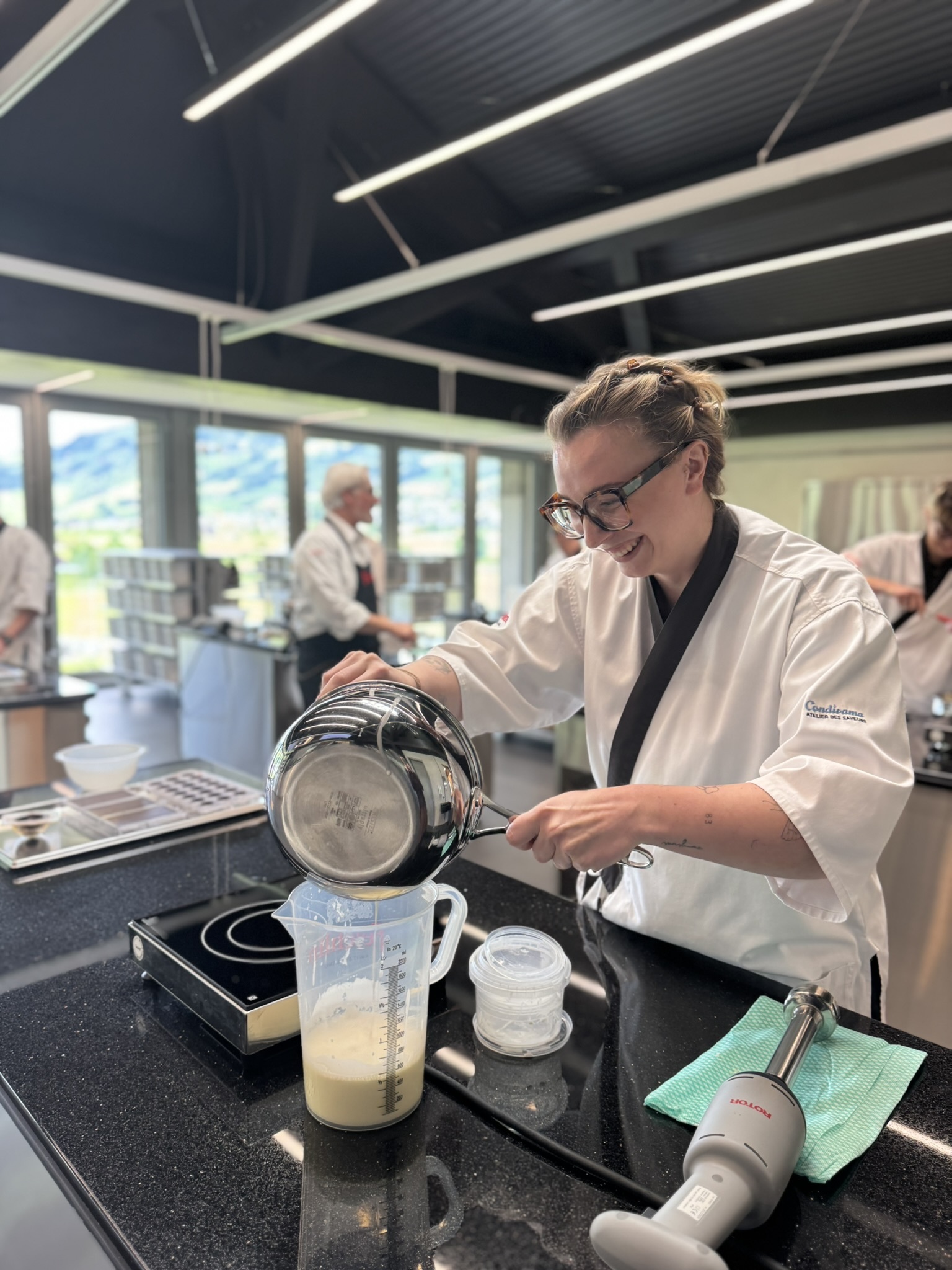
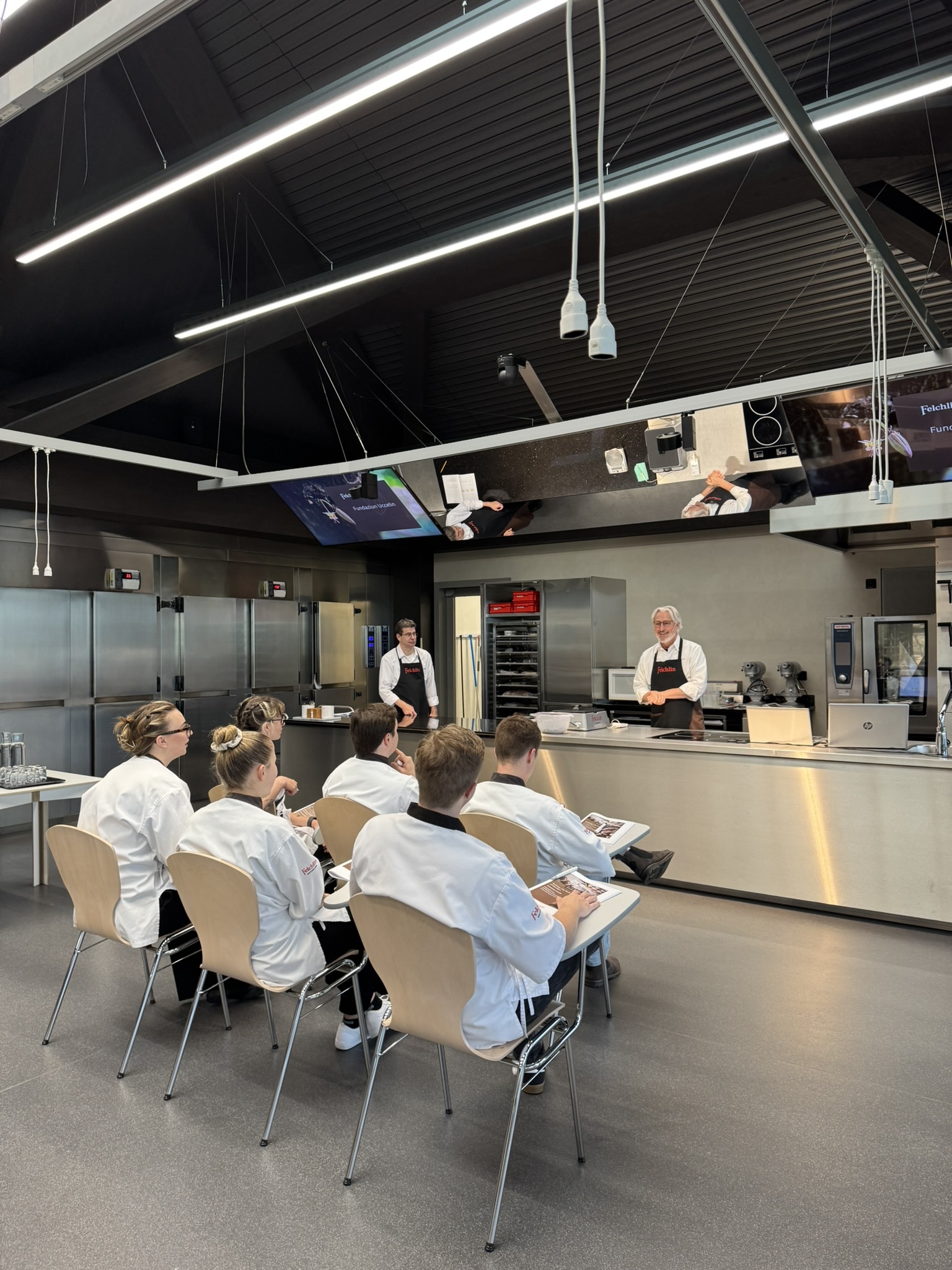
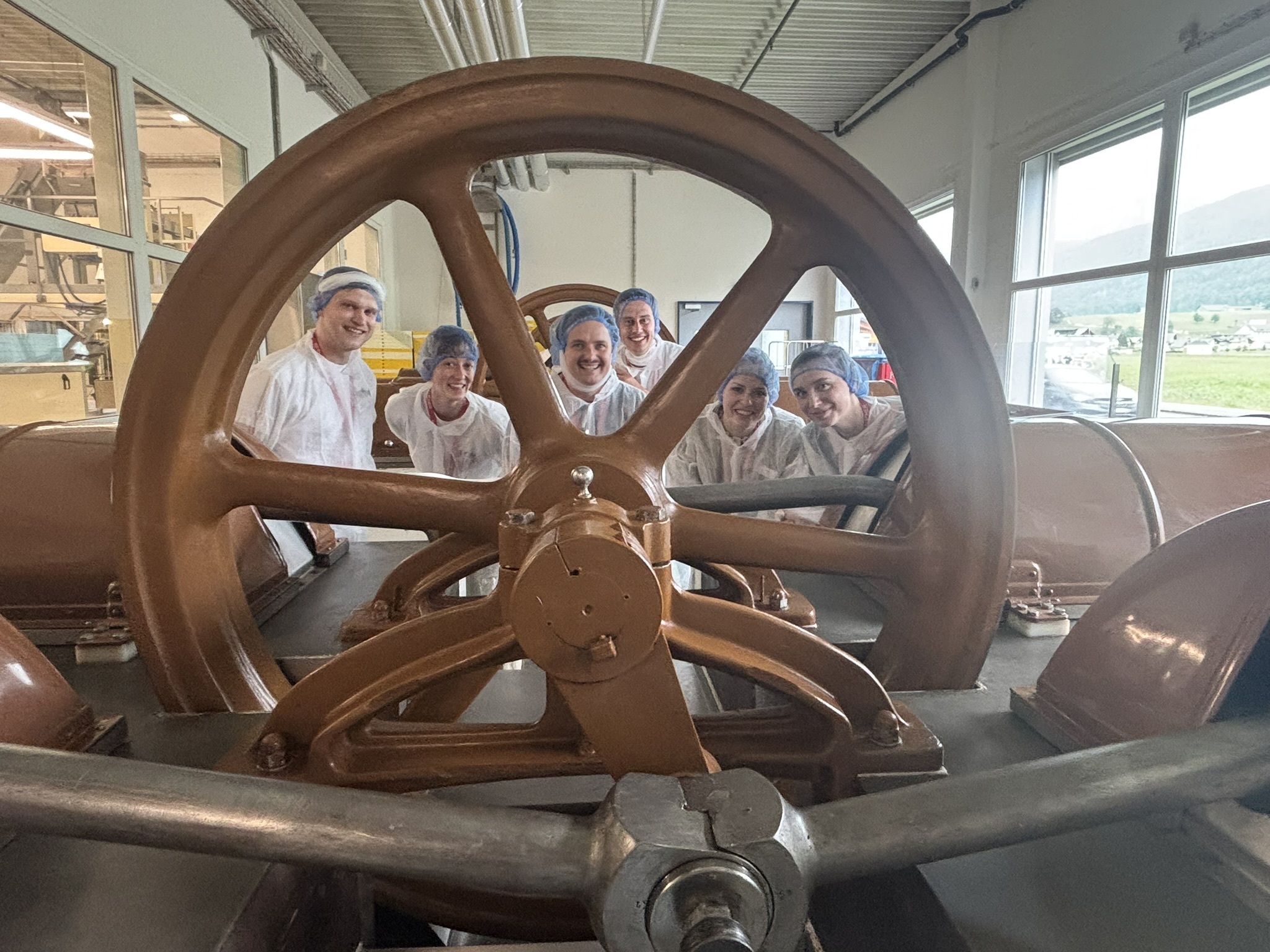
During two intensive days at Condirama, the scholarship holders immerse themselves deeply in the world of chocolate: from the origins of cacao to roasting and processing as well as techniques and sensory understanding. For Caminada, this insight is a central part of the training.
“Felchlin’s expertise is immense. The company combines tradition with modern expertise – and that is exactly what our Uccelins benefit from,” he says. What is particularly valuable is not only the specialist knowledge surrounding couverture and processing, but also experiencing the entire value chain: “They learn where a product comes from, see large traditional machines in action and can expand their network at the same time.”
Understanding chocolate – not just processing it
For young pastry chefs and chocolatiers, it is crucial to truly understand the diversity of chocolate. After all, not every couverture behaves in the same way.
“Every chocolate has its own characteristics and should be processed slightly differently,” explains Caminada.
The key, he says, is to take the time and think carefully about how chocolate is used and how it interacts with other ingredients. Only then can it reach its full potential. Even in modern pâtisserie, high-quality couverture remains indispensable for him: “High-quality couverture is a reliable partner. It must be easy to work with and have a good snap with a beautiful shine, and much more besides.”
Learning in the real world rather than in a test kitchen
The Fundaziun Uccelin takes a unique approach to training. For five months, the trainees work directly in top establishments, restaurants and with producers – not in a sheltered training environment, but right in the deep end of real-world working life.
“It’s not about being in test kitchens,” emphasises Caminada. “Young people should learn at their respective stations, get to know different working cultures and understand the basics of the products.”
Alongside the craft itself, the focus is also on values such as entrepreneurial thinking, perseverance and long-term development. Caminada sees traditional craftsmanship as the foundation of any modern kitchen: “Craftsmanship is the toolbox that stays with you for life.”
Talent is passion
Caminada’s view on talent is also interesting. For him, innate talent plays hardly any role in the profession. Passion, motivation and consistency are far more important.
“It all comes down to passion, enthusiasm and a long-term perspective,” he says. Anyone wishing to develop further should also make a conscious effort to look beyond their own specialism: “Pâtissiers can learn a great deal from savoury cuisine – and vice versa.”
Chocolate remains an emotional element
Even in his own kitchen, chocolate still holds a firm place to this day. Whether in desserts or friandises – pralines to accompany coffee, in particular, are a natural part of the experience at Schloss Schauenstein.
Caminada prefers to combine chocolate with nuts rather than fruit. And what, for him, makes a truly unforgettable dessert? “A mix of temperatures, something baked, something frozen and, of course, a chocolate element.”
Ultimately, the realisation remains: excellence arises where knowledge is shared. That is precisely why the collaboration between the Fundaziun Uccelin and Felchlin is far more than a training module – it is an investment in the next generation of craftsmanship.


We live with passion and responsibility to bring enjoyment from the origin around the world.